Unknown's avatar

About revolutionarypie

Freelance writer and editor Karen Hammonds describes her adventures in preparing historic recipes based on those in old American cookbooks. She is a former editor at WeightWatchers.com and has written for a blog at Saveur.com.

Chocolate Puffs

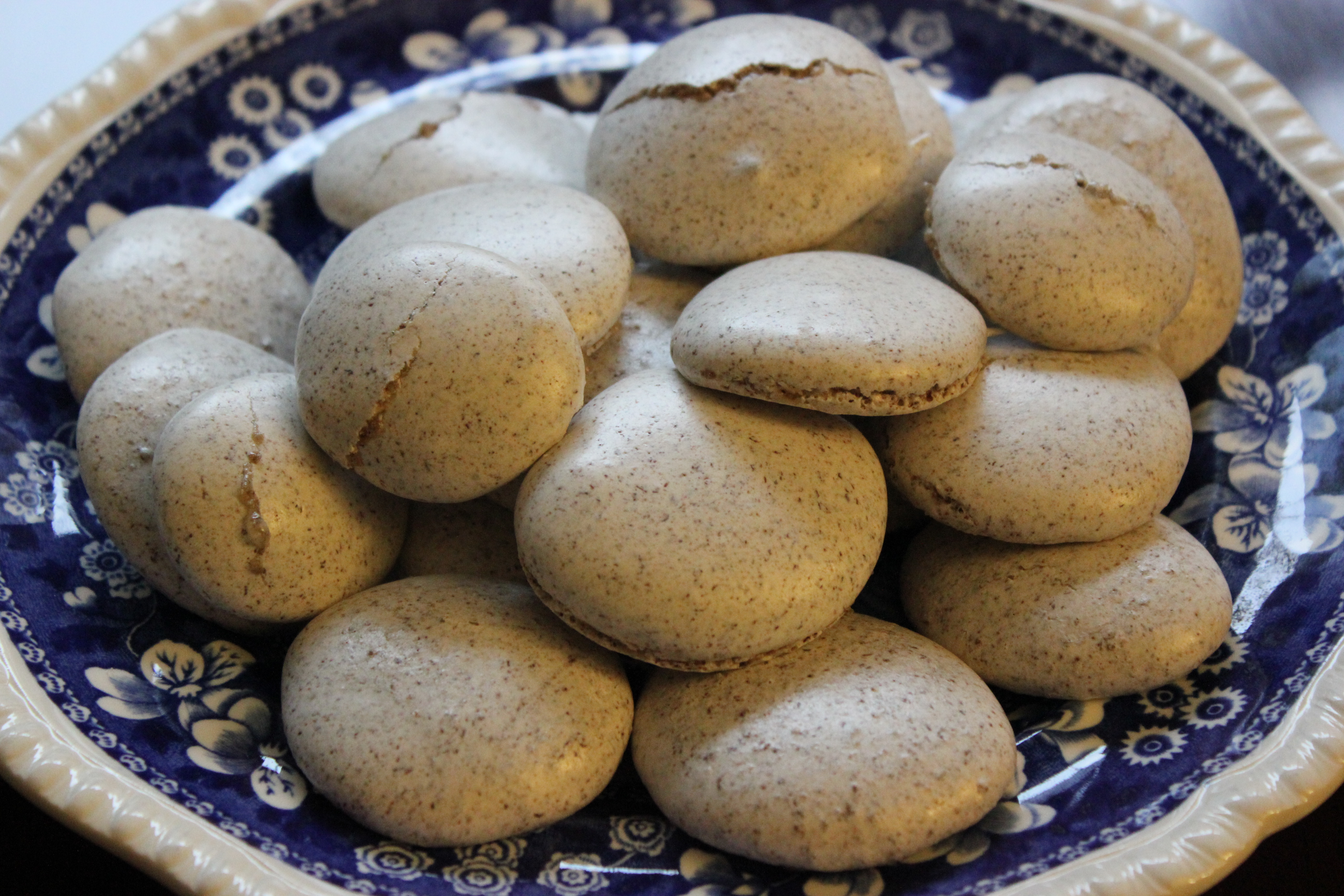
chocolate puffsI recently bought a block of American Heritage Chocolate, a gritty, stone-ground chocolate made in the colonial style, at the Genesee Country Village and Museum in Mumford, New York. I was excited about using it for this blog, but soon discovered that not many 18th-century English or American recipes actually called for chocolate.

Chocolate was widely consumed in colonial America — it was even part of military rations for American and British troops during the Revolutionary War. But until the mid-19th century, it was nearly always used for drinking, not baked in desserts or eaten on its own.

Continue reading

Table Manners

51VM4YOozwL._SS500_My eight-year-old, Katie, has many wonderful qualities, but I wouldn’t list good table manners among them. So I was interested when I saw a book called The School of Manners, or Rules for Children’s Behaviour, in a shop at Colonial Williamsburg.

According to the online Norton Anthology of English Literature, “conduct books” like The School of Manners, which was written by John Garretson and published in London in 1701, had been around since the Middle Ages but became hugely popular with the growth of the middle classes in the 18th century. They offered readers “a way to recognize class distinctions, as well as the hope that they might improve their own station in life through imitating the behavior of their ‘betters.'”  Continue reading

Anadama Bread

IMG_0661I often become interested in a colonial dish only to learn that it’s perhaps not so colonial after all. This happened with anadama bread. It’s described in some modern cookbooks as an 18th century bread, but it doesn’t appear in 18th or even 19th century cookbooks. However, an Anadama brand bread was recorded by the U.S. Patent and Trademark Office in 1850, and there is anecdotal evidence that it was made before then.

There are quite a few legends about this delicious, slightly sweet bread, most involving a fisherman on Cape Ann, Massachusetts, and his wife Anna. Continue reading

Transparent Pudding

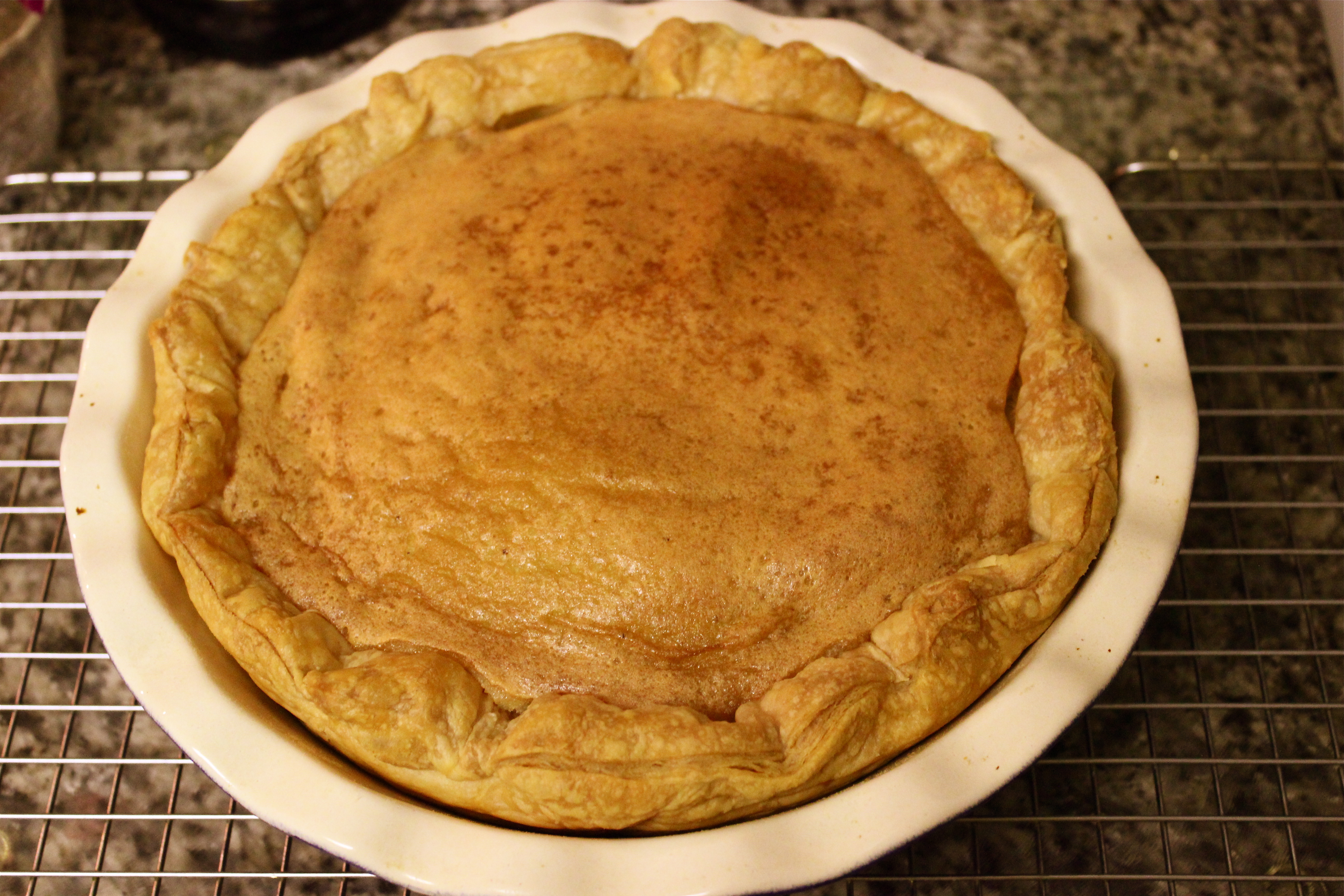
transparent puddingI wanted to make transparent pudding because the name seemed so intriguing — and I wanted to see if it was actually transparent. It’s not, but the filling is sort of cloudy. It’s also more like a pie, but in the 18th century, this type of dessert was called pudding. (For more on the complicated history of pudding in England and America, see foodtimeline.org.)  Continue reading

Hasenpfeffer

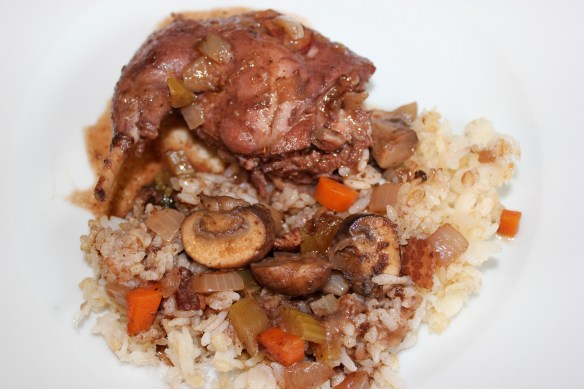
IMG_0512Stewed sparrows, boiled rabbits, barbecued opossum…game recipes like these are common in 18th-century cookbooks, but I tend to avoid reading them. And I can’t look at the skinning illustrations in Joy of Cooking without feeling queasy. Since it’s illegal to sell wild game in New York City, these animals also aren’t easy to come by here. That was my excuse for a while not to try. But I started thinking about how ridiculous my mindset would be to 18th-century Americans, for whom a brace of rabbits was a welcome meal. Continue reading

Sickbed Custard

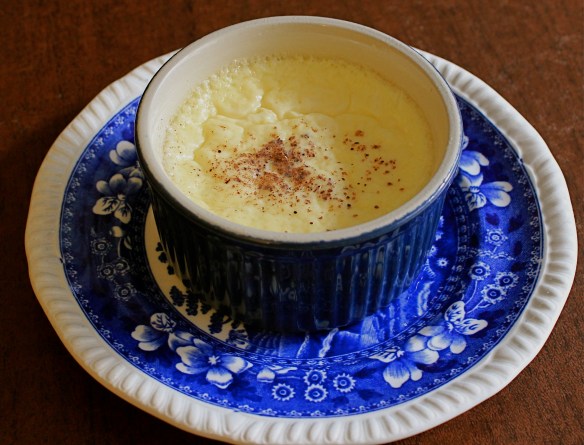
sick bed custardI’ve been battling a cold for the last week, so I decided to try a colonial cure, Amelia Simmons’s “sickbed custard”:

“Scald a quart milk, sweeten and salt a little, whip 3 eggs and stir in, bake on coals in a pewter vessel.”

In the 18th century, many medicinal vessels were made from pewter. It was sturdy and relatively affordable. Lower-quality pewter also usually contained toxic lead, so I hope Simmons was using the good stuff or she may have been sickening people with her sickbed custard.

Continue reading

Mary Ball Washington’s Gingerbread

IMG_0349As my family will attest, I went a little crazy with gingerbread this fall, all in the name of finding the best-tasting, most authentically “colonial” recipe. But really, I just wanted to eat lots of gingerbread. Not the cookie variety so much but soft, cake-like gingerbread — with piles of whipped cream.

Gingerbread actually dates back to medieval times, although it was made quite differently then, with bread crumbs and honey. See theoldfoodie.com for gingerbread recipes from many different centuries. My favorite one there — which I did not attempt — is the shockingly laborious 19th-century “Gingerbread for Voyages or Travelling,” which is baked, grated, kneaded, rebaked, dipped in spirits, washed with isinglass [fish bladder gelatin], wrapped in writing paper, and packed in a box so that “it will keep years.” Continue reading

Hysterical Water

I was going to write about gingerbread this week, but life got too crazy, with school events, birthdays, broken phones, et cetera. I’ve been a little frantic. Which is why I was so taken with Hannah Glasse’s recipe for “hysterical water” in The Art of Cookery Made Plain and Easy, a cookbook published in 1747 in England (and later in America). I did not actually make this recipe — and you’ll soon understand why. 

To make Hysterical Water

Take betony, roots of lovage, seeds of wild parsnips, of each two ounces, roots of single piony four ounces, of misletoe of the oak three ounces, myrrh a quarter of an ounce, castor half an ounce, beat all these together, and add to them a quarter of a pound of dried millepedes; pour on these three quarts of mugwort water, and two quarts of brandy, let them stand in a close vessel eight days, then distill it in a cold still pasted up. You may draw off nine pints of water, and sweeten it to your taste. Mix all together, and bottle it up.

I’m not recommending you try this at home — unless perhaps you’re a Hogwarts student. Here’s my suggested modernized version, for those who feel hysterical but aren’t up for consuming millipedes: Take two quarts of brandy, pour into glasses, and serve.