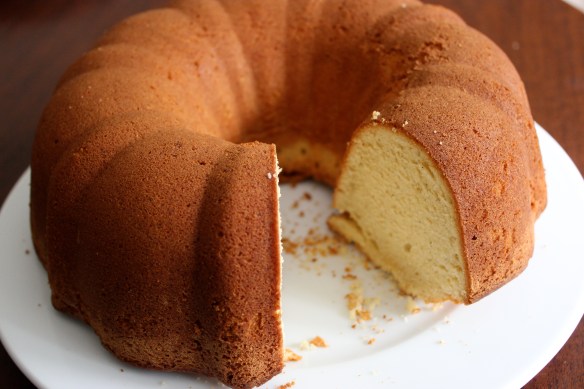
I knew that “pound cake” referred to cakes made with a pound of butter, but I didn’t realize until researching 18th-century cakes that this term once referred to the cake’s other ingredients as well — a pound of flour, a pound of sugar, and even a pound of eggs. Here’s Hannah Glasse’s recipe for pound cake from The Art of Cookery Made Plain and Easy (1747):
Take a pound of butter, beat it in an earthen pan with your hand one way, till it is like a fine thick cream: then have ready twelve eggs, but half the whites; beat them well, and beat them up with the butter, a pound of flour beat in it, a pound of sugar, and a few carraways. Beat it all well together for an hour with your hand, or a great wooden spoon, butter a pan and put it in, and then bake it an hour in a quick oven.
Two things about this recipe really struck me: first, that Glasse recommended beating the butter with one’s hand; second, that she beat the batter for an entire hour! Continue reading →

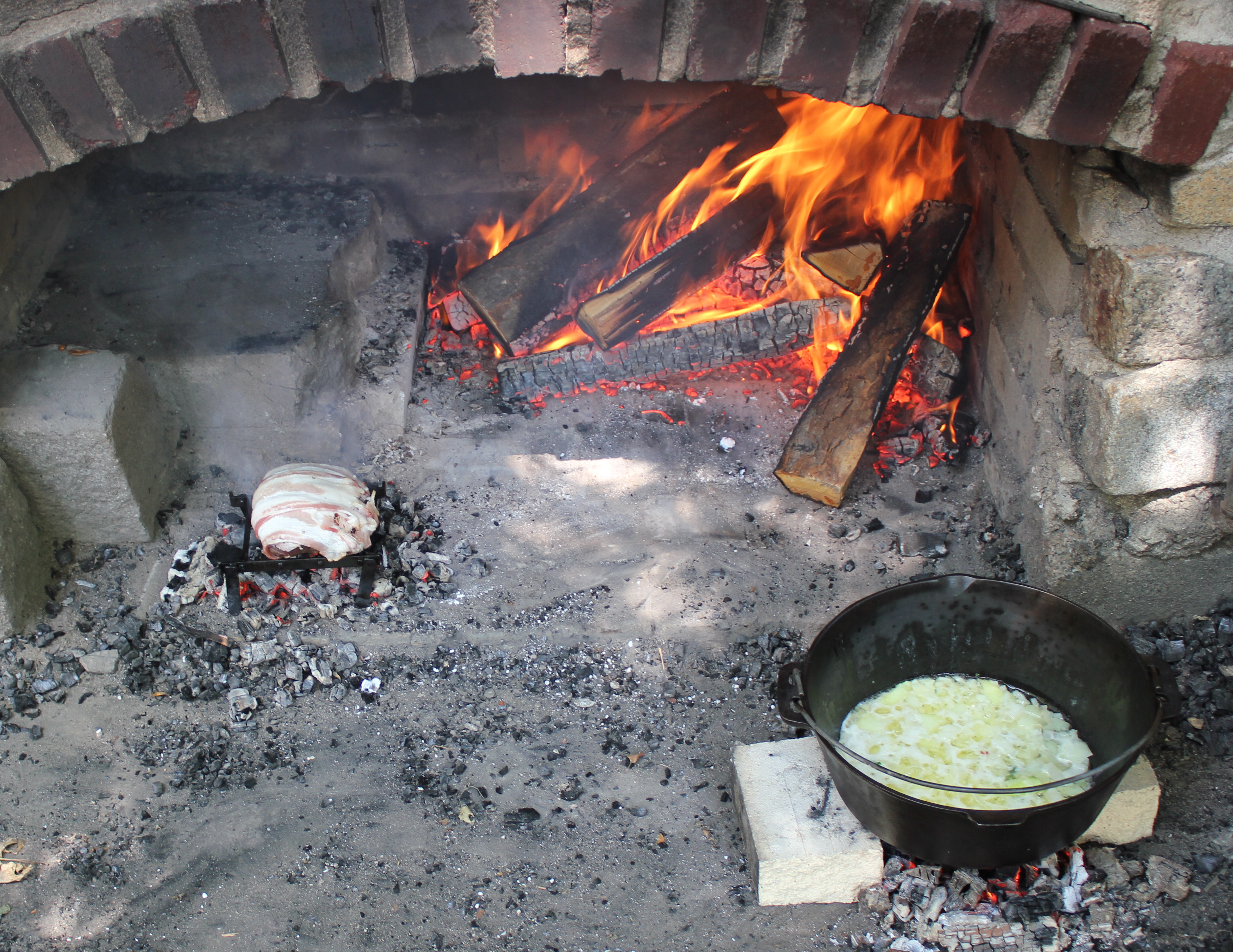 I had seen open hearth cooking at several historic sites but never tried it, so I was really excited about Sarah Lohman’s hearth cooking class at the Old Stone House in Brooklyn last weekend, despite the 90-degree temperature. Sarah, a “historic gastronomist” and author of the fantastic blog Four Pounds Flour, taught a small group of us how to cook an 18th-century meal over an open fire and learn, as she put it, “primal cooking skills.”


 Revolutionary Pie