Pound Cake

Mary Randolph's pound cake

I knew that “pound cake” referred to cakes made with a pound of butter, but I didn’t realize until researching 18th-century cakes that this term once referred to the cake’s other ingredients as well — a pound of flour, a pound of sugar, and even a pound of eggs. Here’s Hannah Glasse’s recipe for pound cake from The Art of Cookery Made Plain and Easy (1747):

Take a pound of butter, beat it in an earthen pan with your hand one way, till it is like a fine thick cream: then have ready twelve eggs, but half the whites; beat them well, and beat them up with the butter, a pound of flour beat in it, a pound of sugar, and a few carraways. Beat it all well together for an hour with your hand, or a great wooden spoon, butter a pan and put it in, and then bake it an hour in a quick oven.

Two things about this recipe really struck me: first, that Glasse recommended beating the butter with one’s hand; second, that she beat the batter for an entire hour!  Continue reading

Colonial Tea Party

the tea party beginsAs my daughter’s spring break approached recently, I wondered whether I would get any blogging done, when inspiration struck: We would have an 18th-century tea party for her dolls, one of which is Felicity, American Girl’s so-called “spunky colonial girl.”  We even had doll-size blue willow china, a nice gift from friends.

Katie is not a girly girl — she’s more likely to make her dolls challenge each other to a duel than have tea — but she liked my idea well enough and got Felicity and Ivy suitably attired in colonial clothing. (Ivy is a Chinese-American girl from the 1970s, but let’s not quibble.) Continue reading

Chocolate Puffs

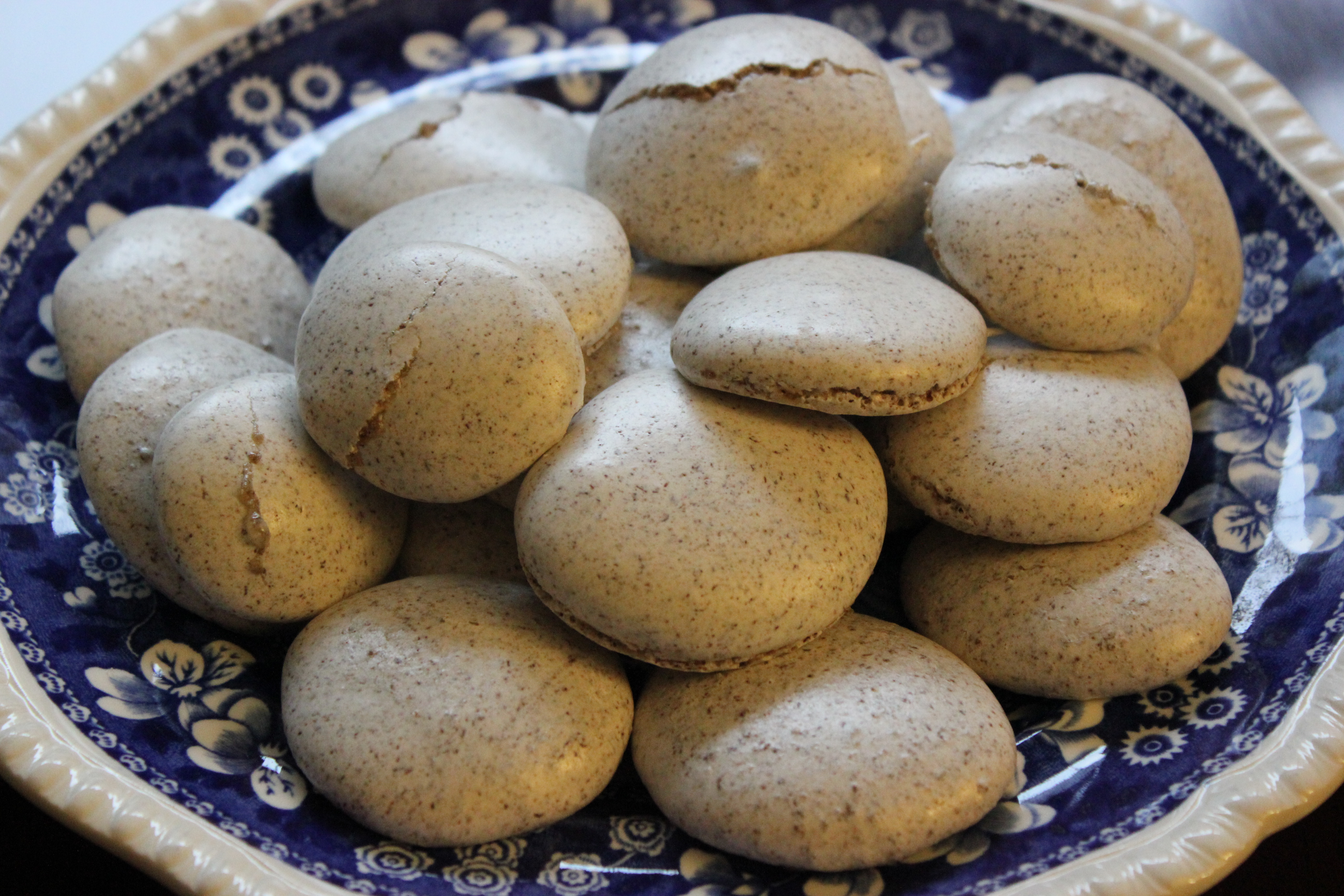
chocolate puffsI recently bought a block of American Heritage Chocolate, a gritty, stone-ground chocolate made in the colonial style, at the Genesee Country Village and Museum in Mumford, New York. I was excited about using it for this blog, but soon discovered that not many 18th-century English or American recipes actually called for chocolate.

Chocolate was widely consumed in colonial America — it was even part of military rations for American and British troops during the Revolutionary War. But until the mid-19th century, it was nearly always used for drinking, not baked in desserts or eaten on its own.

Continue reading

Anadama Bread

IMG_0661I often become interested in a colonial dish only to learn that it’s perhaps not so colonial after all. This happened with anadama bread. It’s described in some modern cookbooks as an 18th century bread, but it doesn’t appear in 18th or even 19th century cookbooks. However, an Anadama brand bread was recorded by the U.S. Patent and Trademark Office in 1850, and there is anecdotal evidence that it was made before then.

There are quite a few legends about this delicious, slightly sweet bread, most involving a fisherman on Cape Ann, Massachusetts, and his wife Anna. Continue reading