Unknown's avatar

About revolutionarypie

Freelance writer and editor Karen Hammonds describes her adventures in preparing historic recipes based on those in old American cookbooks. She is a former editor at WeightWatchers.com and has written for a blog at Saveur.com.

Pound Cake

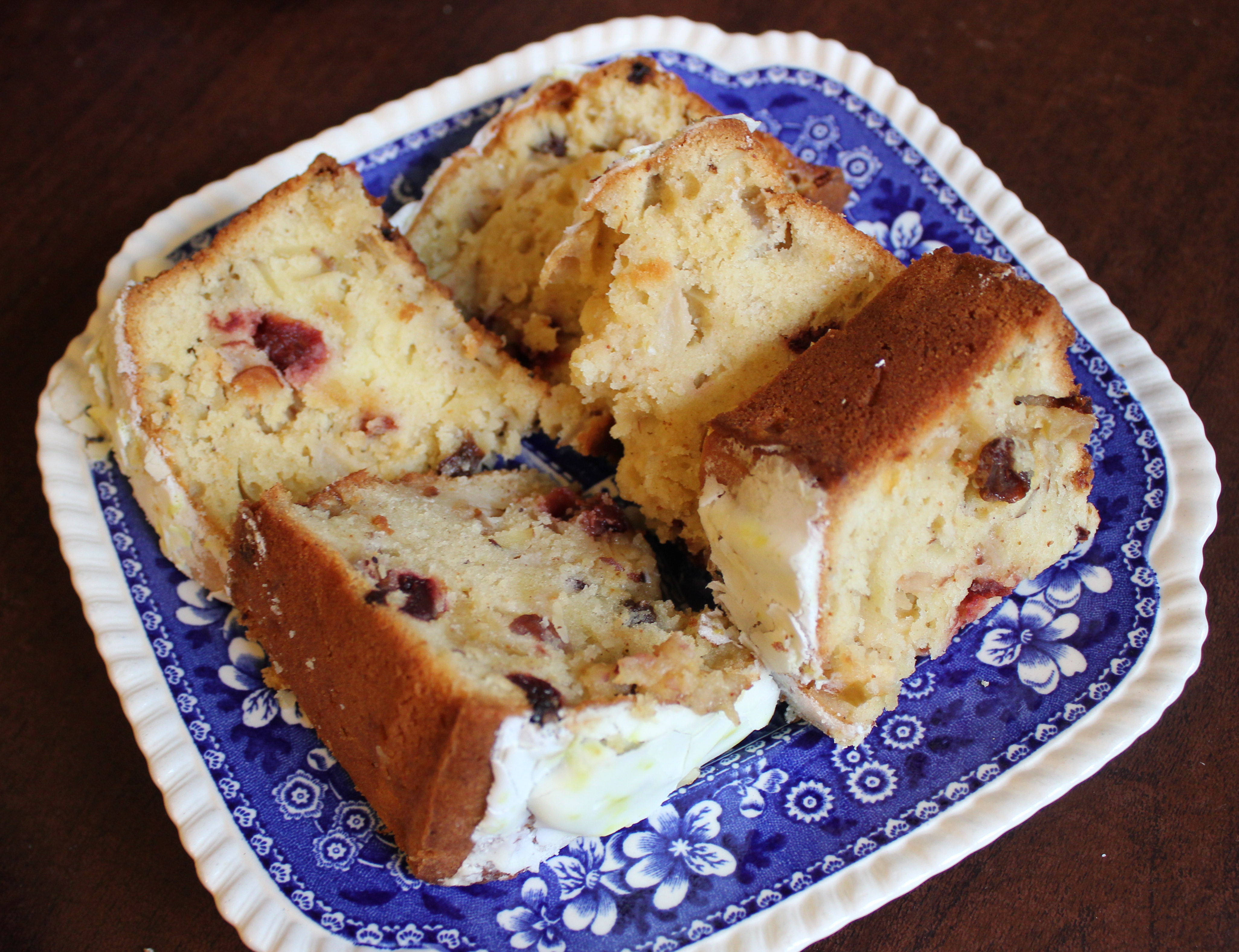
Mary Randolph's pound cake

I knew that “pound cake” referred to cakes made with a pound of butter, but I didn’t realize until researching 18th-century cakes that this term once referred to the cake’s other ingredients as well — a pound of flour, a pound of sugar, and even a pound of eggs. Here’s Hannah Glasse’s recipe for pound cake from The Art of Cookery Made Plain and Easy (1747):

Take a pound of butter, beat it in an earthen pan with your hand one way, till it is like a fine thick cream: then have ready twelve eggs, but half the whites; beat them well, and beat them up with the butter, a pound of flour beat in it, a pound of sugar, and a few carraways. Beat it all well together for an hour with your hand, or a great wooden spoon, butter a pan and put it in, and then bake it an hour in a quick oven.

Two things about this recipe really struck me: first, that Glasse recommended beating the butter with one’s hand; second, that she beat the batter for an entire hour!  Continue reading
Awards Day

veryinspiringaward

I was mired down this week in a post about colonial butter, which just wasn’t coming together, possibly because I don’t have a butter churner and was reduced to shaking cream in a jar (which works, by the way). Fortunately, I was rescued from this predicament by a nomination for the Very Inspiring Blogger Award, which I can now write about instead of butter. Thank you to Lara, inspired author of the wonderful blog Joy, Lovely Joy. If you haven’t visited there, please do! Continue reading

Asparagus Forced in Rolls

forced asparagus in rolls

I’m intrigued by the variety of colonial recipes for stuffed foods, some of them with elaborate “forcing” instructions, as the method was called. Forced cucumber, for example, was stuffed with a mixture of ground beef, suet, and spices, then sewn up with a needle and thread and stewed. Odd but true!

Another approach was to stick foods into (rather than inside) other foods. You see this in desserts like quaking pudding, which has almond slices sticking out of it like a porcupine’s quills. (A picture of this can be seen on the home page of Ivan Day’s website Historic Food.) Another example of this spiking technique is asparagus forced in rolls, which I decided to make since asparagus is so plentiful right now.  Continue reading

Boston Brown Bread

Boston brown breadI got the idea for making Boston brown bread when I saw several big cans of B&M Brown Bread in my mother’s kitchen cupboard the other day. Bread in a can — how weird is that? It’s surprisingly edible, and might be just the thing to stock for the next hurricane. But if you live outside of New England, good luck finding it. “I know what you’re talking about, we don’t have it, and you’re the first person who’s ever asked for it!” said my local grocer.

I wanted to make this bread from scratch anyway, since it dates back to colonial times, or nearly so. Wheat flour was scarce in the American colonies, so “make-do” breads were made from other flours, or a combination of wheat and other flours. Boston brown bread — called just brown bread in New England — contained rye flour, wheat flour, and cornmeal. These were mixed with molasses and buttermilk, and the bread was steamed in a kettle over a fire.

Continue reading

Colonial Tea Party

the tea party beginsAs my daughter’s spring break approached recently, I wondered whether I would get any blogging done, when inspiration struck: We would have an 18th-century tea party for her dolls, one of which is Felicity, American Girl’s so-called “spunky colonial girl.”  We even had doll-size blue willow china, a nice gift from friends.

Katie is not a girly girl — she’s more likely to make her dolls challenge each other to a duel than have tea — but she liked my idea well enough and got Felicity and Ivy suitably attired in colonial clothing. (Ivy is a Chinese-American girl from the 1970s, but let’s not quibble.) Continue reading

Mushroom Ketchup

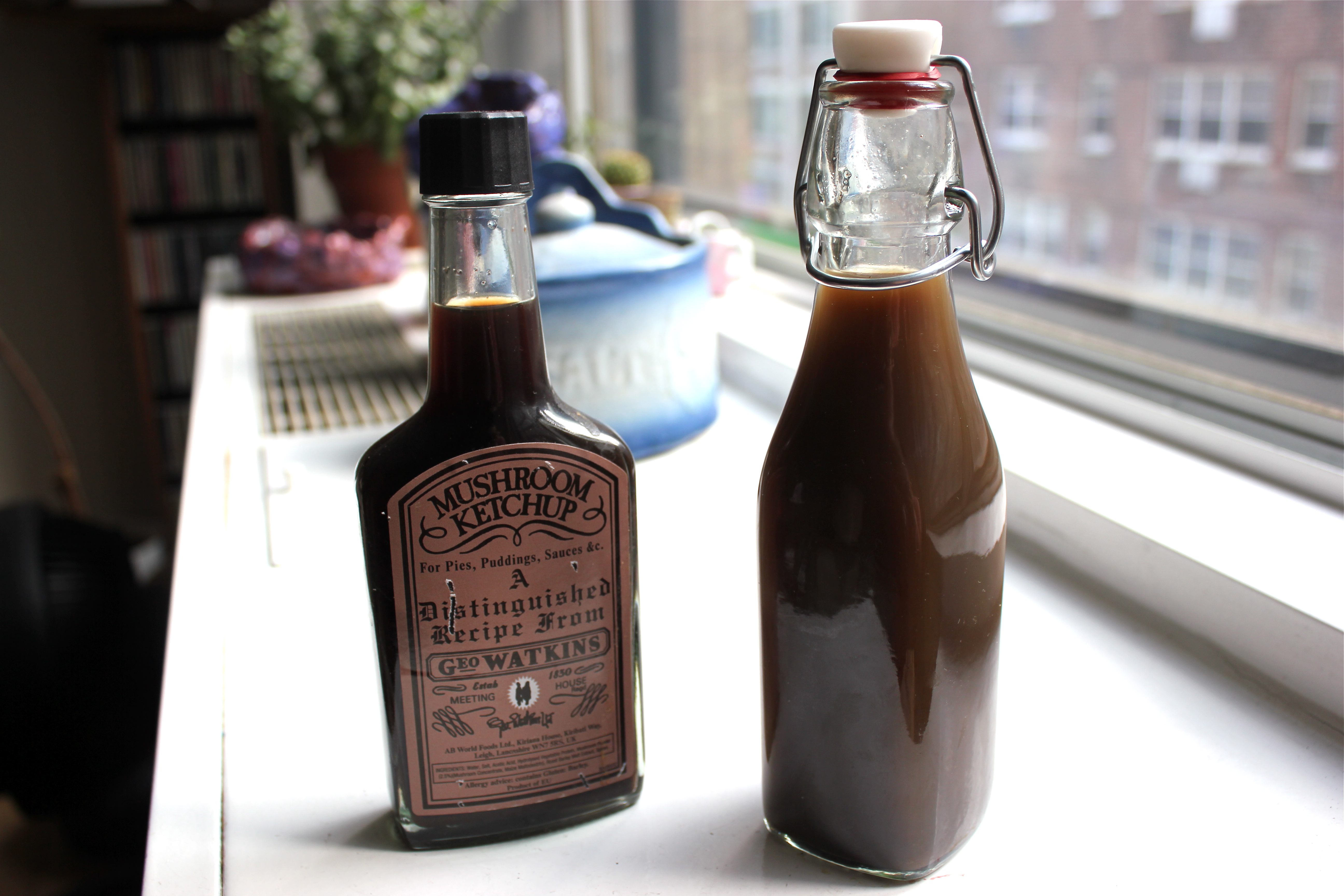
IMG_1112I hadn’t heard of mushroom ketchup before visiting Colonial Williamsburg. It isn’t at all like tomato ketchup, which didn’t exist in the 18th century. Many people in England and North America still believed then that tomatoes were poisonous, and tomato ketchup wasn’t common until the mid-19th century. Until then, ketchups were prepared from mushrooms, walnuts, anchovies, or shellfish. (The word ketchup is thought to come from the Chinese ke-tsiap, or pickled fish sauce.) Continue reading

Martha Washington’s Great Cake

Martha Washington's Great Cake

When I read about Martha Washington’s Great Cake, I wondered whether it was called that because it was really good or really large. I think the name was meant to describe its size — to give you an idea of just how big it was, here is Martha’s recipe:

Take 40 eggs and divide the whites from the yolks and beat them to a froth. Then work 4 pounds of butter to a cream and put the whites of eggs to it a Spoon full at a time till it is well work’d. Then put 4 pounds of sugar finely powdered to it in the same manner then put in the Yolks of eggs and 5 pounds of flour and 5 pounds of fruit. 2 hours will bake it. Add to it half an ounce of mace and nutmeg half a pint of wine and some fresh brandy. Continue reading

Colonial Tofu?

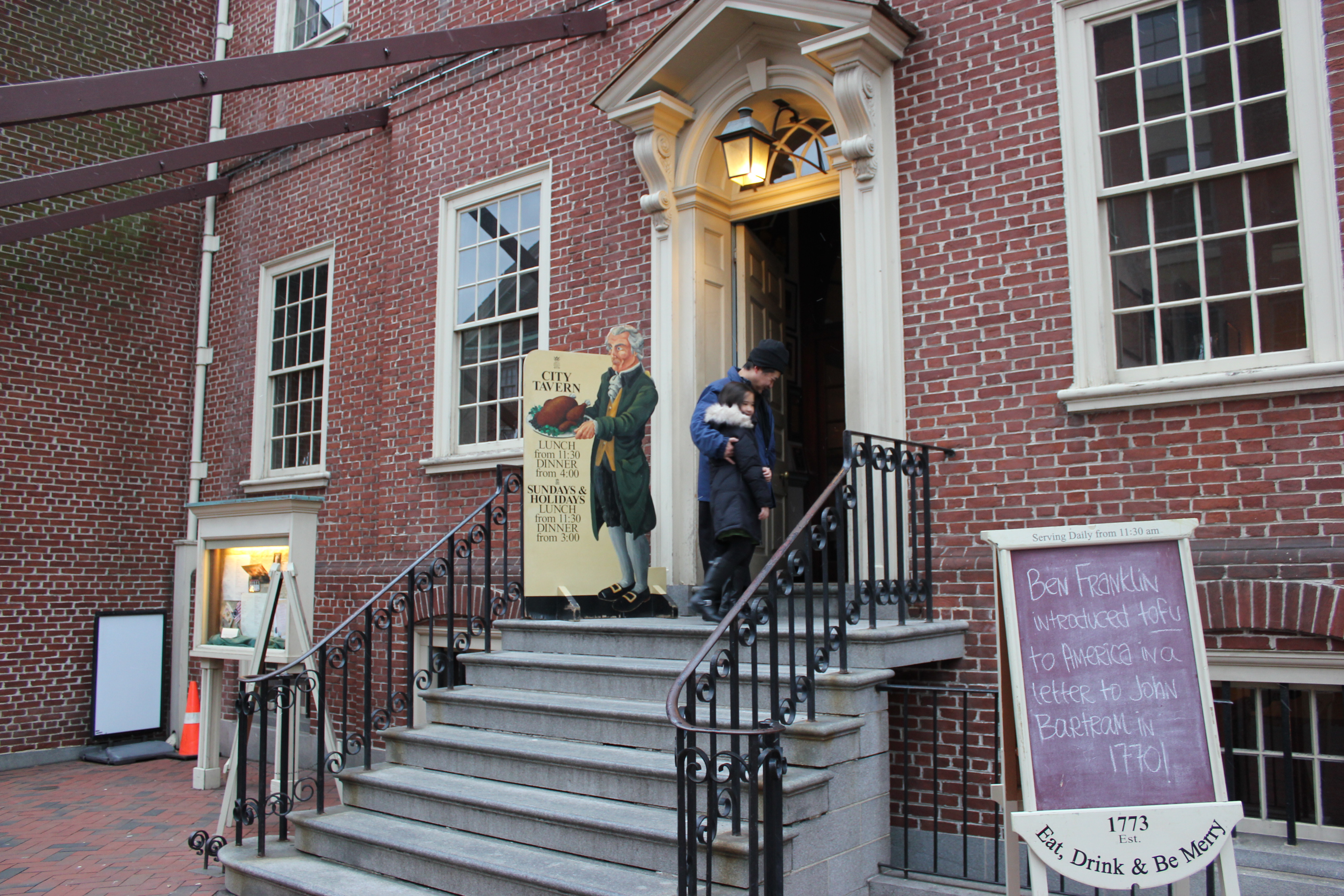
City Tavern, PhiladelphiaMy family visited Philadelphia over President’s Day weekend, and although it was too chilly  for much sightseeing in the Old City historic district, we did eat at City Tavern. Owned and run by Chef Walter Staib (host of the TV series A Taste of History), this fun restaurant is a reconstruction of an 18th century tavern where George Washington and other Founding Fathers dined during the First Continental Congress in 1774, and for decades afterward. Continue reading