
 As my family will attest, I went a little crazy with gingerbread this fall, all in the name of finding the best-tasting, most authentically “colonial” recipe. But really, I just wanted to eat lots of gingerbread. Not the cookie variety so much but soft, cake-like gingerbread — with piles of whipped cream.
Gingerbread actually dates back to medieval times, although it was made quite differently then, with bread crumbs and honey. See theoldfoodie.com for gingerbread recipes from many different centuries. My favorite one there — which I did not attempt — is the shockingly laborious 19th-century “Gingerbread for Voyages or Travelling,” which is baked, grated, kneaded, rebaked, dipped in spirits, washed with isinglass [fish bladder gelatin], wrapped in writing paper, and packed in a box so that “it will keep years.”
Gingerbread was popular in colonial times, but it was usually rolled thin and cut into shapes. The first printed American recipe for the cakelike variety is probably by Amelia Simmons, author of American Cookery (1796):
“Rub three pounds of sugar, two pounds of butter, into four pounds of flour, add 20 eggs, 4 ounces ginger, 4 spoons rose water, bake [15 minutes].”
More typical of what is made today, with molasses and milk, is a recipe attributed to our first president’s mother, Mary Ball Washington. I found many gingerbread recipes on the Web said to be hers, all of them slightly different. What follows is a combination of these. It’s moist and slightly spicy, and it contains brandy, which I normally don’t like but which really complements the molasses and ginger flavors.
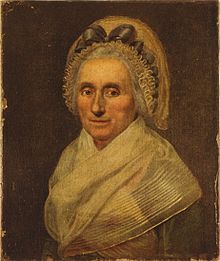
Mary Ball Washington
Mary Ball Washington’s Gingerbread
Adapted from various sources
1/2 cup butter, softened
1/2 cup light brown sugar
1/2 cup molasses
1/2 cup cane syrup, golden syrup, or honey
1/2 cup warm milk
2 tablespoons powdered ginger
1 teaspoon cinnamon
1 teaspoon nutmeg
1/2 teaspoon mace
1/4 cup brandy
3 cups flour, plus 1 tablespoons flour
1 teaspoon cream of tartar
3 large eggs
Juice and rind from one orange (about 1/4 cup juice)
1 teaspoon baking soda
1/4 cup warm water
1 cup raisins
1. Preheat oven to 350°F. Butter a 13-x-9-inch baking pan; set aside.
2. In a large bowl, cream butter and sugar with an electric mixer on medium-high speed until light and fluffy. Add molasses, syrup or honey, milk, and spices, and beat well. Add the brandy and mix well.
3. In a separate bowl, beat eggs until very light and thick. Sift 3 cups flour with the cream of tartar twice. On medium-low speed, incorporate the flour mixture into the batter alternately with the beaten eggs. Mix in the orange juice and rind.
4. Dissolve the baking soda in warm water, then add to batter and beat well.
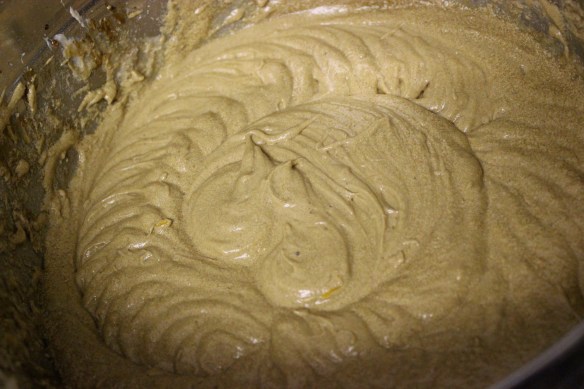
5. Mix the raisins with the remaining 1 tablespoon flour and fold into the batter.
6. Spread the batter in the prepared pan and bake at 350°F for 35 to 45 minutes, until a toothpick inserted in the center of the cake comes out clean.
7. Cool in the pan on a wire rack. Serve with whipped cream, lemon sauce, or sprinkled with confectioner’s sugar.
 Revolutionary Pie
This looks amazing – wish I lived closer to you!
If you visit, I’ll make you some.
I’m confused. Why did you not try the Gingerbread for Voyages or Travelling? 😉
Well, if I can find some isinglass, I’ll get right on it! 😉 It might be nice to have some gingerbread with a really long shelf-life for the next hurricane…
Pingback: Cook like a Washington | Fredericksburg Virginia
Great information. Would the Colonists have served gingerbread with whipped cream?
Great question. They probably wouldn’t. Whipped cream dates back centuries, but the modern, egg-white free version wasn’t common until the 19th century, when wire whisks were manufactured. Before then, people had to whisk things with bundled twigs or rushes, and whipping cream took forever! Gingerbread might have been served with fairy butter, which was a blend of butter, egg yolks, sugar, and rose or orange flower water.
I thought not but wanted to ask. I did find that syllabubs, prominent in the 18th century, consisted of a foamy layer of whipped cream on top of a sweet wine, cider, or even a sweetened whey base.
I have made syllabub — that’s a fun project. Thanks for writing, Regan. I really should have noted in my post that whipped cream would probably not have been served with gingerbread in that period. But they taste so good together!
Yes, my favorite!